Our Western Heritage

Our Western Heritage
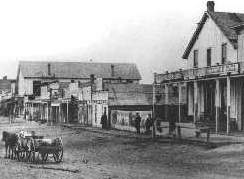
Front Street, Dodge City, circa 1879

Tuesday, February 10, 2009

For Senator Roberts, Senator Brownback: pictorial help, museums versus casinos


Casino


[photo: Beach Museum of Art, Kansas State University, Manhattan, KS]

Museum


or

[photo: Kansas Museum of History, Topeka, KS]

Museum


Casino


See the difference, Senator Sam and Senator Pat ? Different. Really.

Best, for museums, George
Friday, December 12, 2008

Dodge City Commission: Conflict of Interest Guidance

Here's an excerpt from the Government Ethics: Markkula Center for Applied Ethics site, one great resource on ethics. Perhaps a discussion might start? Perhaps the City of Dodge City Commissioners might want to improve our local conflict of interest laws before spending millions and millions of dollars? Yours, Uncle George

Conflicts of Interest in Government

These materials were prepared for the Markkula Center for Applied Ethics program in Government Ethics by Senior Fellow Judy Nadler and Communications Director Miriam Schulman. The Center provides training in local government ethics for public officials.


What are conflicts of interest?

Conflicts of interest occur when an officeholder puts his or her personal or financial interest ahead of the public interest. In the simplest terms, the official reaps a monetary or other reward from a decision made in his or her public capacity.

The most common conflicts in local government happen when officeholders face a vote on real property/land use issues that affect their own holdings. Other examples include voting to grant a benefit to a company in which the officeholder owns stock or even to a non-profit organization on whose board the officeholder may sit.

When a conflict of interest is possible, an officeholder is expected to abstain from the discussion and the vote.

What do conflicts of interest have to do with ethics?

Public service is always about protecting the common good, which may be defined as the common conditions that are important to the welfare of everyone-police, fire, parks, libraries, and other services. A public servant must always put the common good ahead of any personal, financial, or political benefit they might receive from a decision about such matters as where to situate a park or who should collect the garbage.

Also, conflicts of interest interfere with the basic ethical principle of fairness-treating everyone the same. A public official should not take unfair advantage of his or her position by voting on a matter that could benefit them at the expense of others.

Finally, conflicts of interest undermine trust. They make the public lose faith in the integrity of governmental decision-making processes.

What ethical dilemmas do conflicts of interest present?

Many times, government officials honestly believe that they are not being unduly influenced by their personal stake in an issue. They may feel, to the contrary, that their interest in the matter gives them special insight into the subject. A city councilmember who ran on a platform of revitalizing the downtown, for example, may feel entirely justified in supporting measures to improve the area, even if part of the benefit of such improvement might go to their own business. They might argue that they understand the problems of a downtown business because they own one. They might claim, further, that their constituents elected them specifically to represent this interest.

But conflict of interest laws prevent such partiality. First, it's almost impossible for individuals to determine whether they are being fair when their self-interest is involved. Also, as the Institute for Local Self-Government puts it, "The law is aimed at the perception, as well as the reality, that a public officials personal interests may influence a decision." Even the appearance of impropriety undermines the public's faith that the process is fair.

Another common misconception about conflicts of interest is that officeholders are absolved of their responsibility merely by being transparent about their stake in the issue. It is not sufficient for government officials to make conflicts public. They must take themselves out of the decision-making process altogether.

This includes discussion and debate as well as actual voting. Abstention is only half the requirement. A public official is also expected to refrain from public pronouncements and private arm twisting on decisions in which he or she has an interest.

Note, also, that the interest may be personal as well as financial. Helping one's fraternal order to obtain rent-free space in a public building is a form of conflict of interest, especially if it improves one's standing in the organization. Being elected president of a community group because of such favors might prove to be in an officeholder's personal and political interest when the next election rolls around. Conversely, public office should not be used to punish one's personal and political enemies. Voting no on your annoying neighbor's reasonable zoning waiver request is another form of putting private ahead of public interest.

Monday, November 24, 2008

Serious problem, Dodge City Conflict of Interest ordinances

Finally, thanks to Ken Strobel, City of Dodge City Manager and Brad Ralph, City of Dodge City Attorney, the serious issue of non-applicable conflict of interest ordinances on the Dodge City code has a possible answer -- if the Dodge City Commission decides to fix it -- and fixes it before millions and millions of tax dollars are spent on the Events Center and the infrastructure connected with it and the Casino.

According to a reply on my request for a ruling on whether the City of Dodge City conflict of interest ordinances -- see previous post -- apply to ANY city appointed volunteer committees:


City of Dodge City Code, Article 4, Chapter 1, Article 1-404(e):
(e) Conflict of Interest - No elected or appointive city official or employee, whether paid or unpaid, shall engage in any business or transaction or shall have a financial or other personal interest, direct or indirect, which is incompatible with the proper discharge of his or her duties in the public interest or would tend to impair his or her independence of judgment or action in the performance of his or her official duties. Personal as distinguished from financial interest includes an interest arising from blood or marriage relationships or close business or political association. Specific conflicts of interest are enumerated below for the guidance of officials and employees:


Mr. Ralph states:

...There exists no definition within the city code of the term, "city official". However, the fact that this provision contemplates the city official potentially being "appointive" and "unpaid" would lead one to believe that members of city boards are, in fact, included within these provisions....

...it would seem reasonable to contemplate that members of city boards and committees would, in fact, be subject to the conflict of interest provisions found within Article 4 of the city code. However, as I have previously indicated, the code provisions are sometimes vaguely worded and may not be as clear as one would wish.


Now, time to see if Mr. Strobel and Mr. Ralph suggest a definition of "appointed city officials" and if the Dodge City Commissioners decide that ethics and codes that are applicable to city committee members -- all committees -- are wanted by them or not. If the city commissioners do nothing -- ie.,they now know that there are no conflict of interest codes which clearly apply to appointed committees, including CFAB -- then I guess that conflict of interest issues are not important to them -- I would hate to think that they may want there to be no applicable laws.

I don't want to be that negative -- so I look forward to a very fast update of the codes so that they clearly apply. If this issue matters to you, contact the City Commissioners and ask when they may fix this very glaring problem with Dodge City laws.

They can be reached at:


Monte Broeckelman
Email: mbroeckelman@yahoo.com

Jim Sherer
Email: jim.sherer@yahoo.com

E. Kent Smoll, Mayor
Email: ksmoll70@hotmail.com

Rick Sowers, Vice-Mayor
Email: rsowers@starrtech.net

Brian Weber
Email: commissionerweber@gmail.com


Yours, Uncle George

Friday, October 17, 2008

Dodge City, a town with no interest ?

Currently, a request for a legal ruling on which city committee members of Dodge City are covered by the conflict of interest ordinances is slowly moving through the city attorney's office (or actually, a hired city legal advisor office) -- so it might be useful to first review the current laws -- laws that right now seem to apply to no one at all. Here's the Dodge City laws that should apply -- but, we've been told -- don't since "appointive city official or employee, whether paid or unpaid" was not a term that was defined (and I'm still waiting for a list of city employees that are not paid -- )

Dodge City Municipal Code

(e) Conflict of Interest - No elected or appointive city official or employee, whether paid or unpaid, shall engage in any business or transaction or shall have a financial or other personal interest, direct or indirect, which is incompatible with the proper discharge of his or her duties in the public interest or would tend to impair his or her independence of judgment or action in the performance of his or her official duties. Personal as distinguished from financial interest includes an interest arising from blood or marriage relationships or close business or political association. Specific conflicts of interest are enumerated below
for the guidance of officials and employees:

(1) Incompatible Employment - No elected or appointive city official or employee shall engage in or accept private employment or render services for private interests when such employment or service is incompatible with the proper discharge of his or her official duties or would tend to impair his or her independence of judgment or action in the performance of his or her official duties.

(2) Disclosure of Confidential Information -
No elected or appointive city official or employee, shall, without proper legal authorization, disclose confidential information concerning the property, government or affairs of the city. Nor shall he or she use such information to advance the financial or other private interest of himself, herself or others.


So, the question being asked the City Attorney now is if these laws apply to ANY city committee members at all. Since a couple of the Dodge City commissioners talked much about their ethics during the election, seems to me that if no Dodge City conflict of interest laws apply to anyone, there's not much to talk about concerning ethics in Dodge.

You'll be informed as soon as that nice outside paid lawyer lets us know. Until then, guess that Dodge City has no interests to have conflicts over? Or just no laws concerning what, in most places, would be illegal involvement of appointed city officials making money off of your tax dollars -- and getting to make decisions for their own personal financial gain on how to spend those dollars.

Waiting too, Uncle George

Friday, September 26, 2008

Kansas Casino Awarded Butler National, Dodge City Casino, Ford County Kansas 5-2 decision by Kansas Gaming Casino Review Board

From the Dodge City Daily Globe, Dodge City casino contract awarded to Butler National: 5 - 2 vote by Kansas Gaming Commission Casino Review Board

Butler gets the contract on a 5-2 vote. Board Chairman Matt All and Jim Bergfalk supported the D.C. Resort proposal. The other members favored Butler.

Next up, a background check.


Even I suggest that the background checks will go well for the local folks financially involved or as representatives. More interesting is how much Why Not Dodge? sales tax money will be used for the infrastructure.

Time for follow-up to great Dodge City Daily Globe article on that $34 million possible tax dollar cost (in twenty or thirty years, it might be paid back -- ) by now new managing editor Mark Vierthaler. Tax payers would be smart to get involved.

Casinos by state of Kansas gaming casino law are to use no tax money at all -- although a court has refused to rule on the use of benefits such as city water/sewer being put in 50 feet away, etc. in locations that would never be used for city property normally. This involves a huge ecological cost, too.

If Dodge City and Ford County citizens require it, cost savings would be massive if the infrastructure cost is shared and shared fairly. Butler publicly promised to pay their fair share -- I hear one third of it being the opening bid... I would go one half.

Thursday, July 24, 2008

Kansas Gaming Director Stephen Martino: Higher ethics required for gambling management

Stephen Martino, Kansas Racing & Gaming Commission Executive Director, gave a speech (with questions taken) to the Dodge City Rotary Club public lunch forum held Wednesday, July 23. The major keynote and theme of the speech was Mr. Martino's clear and serious statements about the ethics rules imposed on the whole KS Gaming commission -- not only can they not have any financial interest,etc., in a Kansas casino, but can't even stay at the future hotels that will part of the Ford County - Dodge City casino when built.

Stephen Martino has been in the position since appointed in 2005 by Governor Sebelius. He is a lawyer, and also founded the Kansas Responsible Gambling Alliance, "a group of state agencies and interest groups involved in responsible gambling promotion and problem gambling treatment."

It will be of interest how local conflict of interest issues affect the casino review board's decision -- Mr. Martino is not on it -- but if his speech is any indication, it wouldn't seem good for any applicant to be anywhere near any ethical or legal issues at all, let along be directly involved in a formal business manner.

The issue will be presented in the brief comment section of the July 31st public hearings in Dodge City for Butler National Services Inc. and Dodge City Gaming Inc.

Whatever the outcome, Mr. Martino was very sincere and serious about the requirement of his agency to hold to a higher ethical standard than even required by law.

Thank you for that, Stephen.

Best, Uncle George
(note: no financial connections to any of the proposals, the land, the land sales, the road construction, the water wells, none, nope.)

Friday, July 18, 2008

Dodge City Resort and Gaming Co. presentation:

Dodge City Casino Presentation by Dodge City Resort and Gaming Co.

...If Dodge City Resort and Gaming's proposal is selected by the Lottery Gaming Facility Review Board for further development, the casino would be built on 281 acres in the northeast corner of the city by Highway 50. The Western-style casino would consist of 800 gaming machines, 20 gaming tables, conventions and meeting rooms, three rodeo arenas, an RV park and livestock showroom and several buildings reminiscent of Front Street in the 1880s....

...During the first year of operation, the casino developer would pay the state about $13 million in gaming revenues as well as property, local and sales taxes, said Joseph. Of that amount, $1.3 million would be split evenly between the Ford County and Dodge City....


Time that Dodge City and Ford County citizens faced facts -- $1.3 million oh boy -- with need for expanded fire, EMS and police force....... property taxes watch out. We're high anyway. Guess we're going to be higher.

Makes matters even more expensive for the Butler National Services proposal -- way out 2 miles west of town. No fire/EMS near it at all. Will require a new fire station I would bet. Money, money, money. And none of it for you or me. Darn it. Unless you're the winner at the casino. Yup, that one. Or you're the real estate CFAB chair broker for Butler National, if they get it.

Don't bet on that yet, folks. The massive complaints about conflict of interest concerning one CFAB Chair Greg Starks may take up an hour at the July 31st public statement part of the review. Might make a difference, might not.

But given the time delays that could be caused by legal action against the Events Center location, et al, I would suggest that the Kansas state review board (hi, board members) might not want to bet on income for the state of Kansas for a long time if that west location is chosen -- unless one CFAB Chair resigns before the July 31 meeting. Then, no issue.

Best, Uncle George (note: no financial connections to any of the proposals, the land, the land sales, the road construction, the water wells, none, nope.)